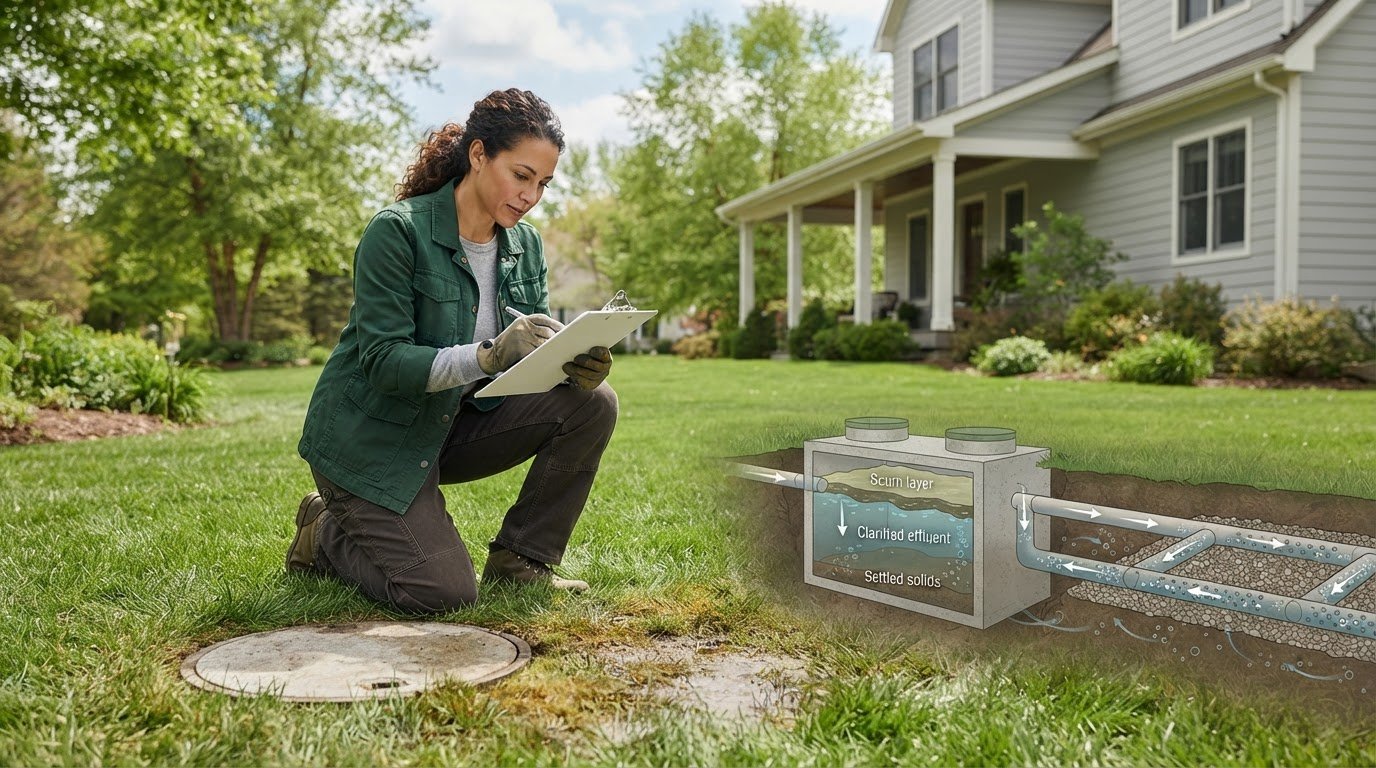

The safest septic repair often starts with knowing when not to repair it yourself. A slow drain, sewage odor, wet ground, or a backup can point to different problems, and guessing can make damage or exposure risks worse. A Septic system for DIY repair begins with careful observation, not digging or opening a tank.
Some homeowner actions can reduce strain on the system, but they won’t identify every failure or make invasive work safe. Start by recording what you see, then compare the symptoms with your system’s known layout and maintenance history. This guide explains which steps are reasonable, what warning signs mean it’s time to stop, and how to consider remediation without treating it as a substitute for diagnosis.
Aerobic bacteria use oxygen to break down waste and can play a role in managing bio-mat, the biological layer that may limit drainfield performance. If the evidence points to a problem that may respond to aerobic treatment, Aero-Stream’s Residential Remediator® Kit is one product option to evaluate. The steps below help you match symptoms to a sensible next move and avoid repairs based on guesswork.
Key Takeaways
- Use symptom records and system details to narrow down what may be happening, without treating symptoms as a diagnosis.
- For a Septic system for DIY repair, keep homeowner actions low-risk: document changes and follow applicable product instructions.
- Learn how oxygen supports aerobic bacteria and why bio-mat may affect drainfield performance, along with the limits of aeration.
- Compare remediation options against relevant test evidence and the likely cause before choosing a next step.
- See when a Residential Remediator® Kit may be an option, and when the available evidence calls for stopping DIY work.
Septic System DIY Repair: Start by Recognizing Symptoms and Setting Safe Limits
Visible wastewater, persistent odors, slow drains, or unusually wet ground near the drainfield deserve attention, but none identifies the cause by itself. A blockage, excess water, a damaged component, or a drainfield problem can produce overlapping symptoms. Treat what you see as evidence to record, not permission to open the Septic Tank or start digging.
A safe Septic system for DIY repair starts with a clear boundary: observe and document from a safe location. Don’t enter, dismantle, or alter system components to test a theory. If wastewater is exposed or a cover appears unstable, keep people and pets away and stop work. The sections below distinguish low-risk assessment from remediation options and repairs that require a clearer understanding of the system.
Which septic warning signs should you document first?
Build a short timeline. Note when each symptom began, where it occurs, and whether it is constant, intermittent, or changing. Record whether a slow drain affects one fixture or several, whether odors are indoors or outside, and whether wet ground appears in the same area after rainfall or wastewater use. Describe what you observe without touching or disturbing the system.
Also record changes that could help explain the timing, such as guests staying in the home, unusual water use, or a large wastewater load. Keep the details factual. “Wet patch beside the drainfield after heavy household water use” is more useful than assuming the drainfield has failed. For basic background on tank function and treatment, see How a Septic Tank Works.
- Write down dates, locations, and changes in symptom severity.
- Record which fixtures or areas are affected, without opening access covers.
- Note recent household water-use changes and unusual wastewater loads.
When should a homeowner stop a DIY septic repair?
Stop if sewage is exposed, a cover or riser looks unstable, or you don’t know the system’s layout or condition. These are not situations for trial and error. Avoid contact with wastewater, keep others away from affected areas, and arrange a qualified assessment before deciding what repair or remediation fits the evidence.
Never enter a Septic Tank. It is a confined space where hazardous gases and low oxygen can create life-threatening conditions, even when the tank looks accessible. Do not lean into an opening or attempt a rescue by entering. Avoid digging, dismantling components, or changing equipment before the cause is understood. A premature change can obscure useful clues or worsen the problem. First document what you can observe safely, then use the system details and symptoms to guide the next decision.
How Septic Systems Work: Follow Wastewater, Solids, and Treatment Clues
A septic system is a group of connected components that receives household wastewater, separates solids, treats the liquid effluent, and disperses it into the soil. Following that path helps you understand where a problem might begin: in the tank, at an outlet or pipe, or where the drainfield accepts treated effluent. A visible symptom alone can’t tell you which part is affected.
In the tank, a Settling Chamber slows effluent flow so solids can settle. Wastewater then moves onward while solids are retained for further breakdown. At the outlet, an Effluent Baffle, a T-shaped device, helps prevent surging and blocks solids from leaving the Septic Tank. Some systems also have an Effluent Filter, a cartridge that allows liquids to pass while blocking solids at the tank outlet.
How do the tank and drainfield work together?
In sequence, wastewater enters the tank, solids settle, and liquid effluent exits through the outlet. If an Effluent Filter is present, it helps limit solids moving into the next part of the system. Effluent then travels through pipes to the drainfield, where it is dispersed into surrounding soil for further treatment.
The drainfield depends on soil conditions as well as what arrives from the tank. Excess solids moving downstream or soil that cannot accept effluent effectively may reduce system performance. That is why the same symptom, such as slow drainage or wet ground, can have more than one possible explanation. A Septic system for DIY repair needs to be understood as a connected system, not a single tank or pipe.
System performance depends on balanced wastewater flow, effective solids management, and soil conditions that can accept treated effluent.
What do aerobic bacteria and bio-mat have to do with treatment?
Aerobic bacteria are oxygen-requiring microbes that break down waste. In systems where oxygen is supplied to wastewater, these microbes support aerobic treatment. Their activity relates to biological material in the system, including the bio-mat, a layer that can build up around drainfield dispersal areas and reduce soil permeability.
The relationship is not a simple “add oxygen, fix the system” equation. If bio-mat is contributing to restricted soil absorption, aerobic treatment may help address biological loading under suitable conditions. Oxygen won’t repair a damaged pipe, correct every hydraulic or soil limitation, or resolve every cause of poor performance. The likely problem and the system’s design matter.
To learn how controlled aeration is intended to support treatment, read about the aerobic septic remediation approach. Match a remediation choice to the suspected cause and relevant evidence rather than assuming all septic symptoms point to the same fix.
DIY Septic Repair or Stop Work? Compare Tasks by Risk and Evidence
Set your limit by the task. Reviewing instructions or planning routine care is different from opening equipment, changing wiring, or altering wastewater flow. A DIY label doesn’t make an action safe for every system. This table separates information-based homeowner tasks from work that calls for a clear diagnosis and system-specific knowledge.
| Task | Homeowner action | Risk | Evidence needed |
|---|---|---|---|
| Routine water-use practices | Use water responsibly and avoid unnecessary, concentrated wastewater loads. | Low; this is a household practice, not a system repair. | Awareness of household use and any guidance for your system. |
| Planned cover-inspection schedule | Know the septic tank maintenance interval, meaning the recommended frequency for inspecting a Septic Tank cover. Don’t handle an unstable or unsafe cover. | Low when you follow the schedule without disturbing unsafe access. | System records or applicable maintenance guidance. |
| Product operation | Follow instructions for equipment or products already in use. Don’t improvise settings or procedures. | Varies by product and task; incorrect changes may affect treatment. | The exact product instructions and system context they apply to. |
| Wiring or equipment replacement | Don’t alter unfamiliar wiring or replace components based on appearance alone. | High if connections, specifications, or system design are uncertain. | Equipment specifications, system requirements, and a clear understanding of the work. |
| Structural changes or flow alterations | Stop rather than digging, dismantling components, or redirecting wastewater. | High; the work may damage the system or change how it treats and disperses effluent. | A diagnosis of the affected component and a repair plan suited to the system. |
Which homeowner actions are limited to observation and routine care?
Keep routine care focused on household practices and planned maintenance, not component repair. Septic system maintenance includes responsible water use, inspections, and leak checks. Use the applicable septic tank maintenance interval as a planning reference, but don’t treat a cover inspection as permission to open the tank or work on equipment. If a task goes beyond following product instructions or ordinary household care, assess the risk before proceeding.
Which conditions make a repair attempt too risky?
Unknown wiring, damaged structures, or wastewater flow you can’t account for are clear reasons to stop hands-on work. So are tasks that require opening, dismantling, or changing system components without knowing their function. Environmental regulations govern septic system installation and operation, and requirements can depend on the work and location. Review the applicable requirements before making a change; don’t assume a project is exempt because it is DIY.
For a Septic system for DIY repair, the useful dividing line is whether the task stays within routine care and clear instructions. If it involves structural work, electrical uncertainty, or changing treatment or flow, pause until the cause and suitable response are established.

Aerobic Septic Remediation: Understand Oxygen, Bio-Mat, and Test Evidence
Aerobic remediation is worth evaluating when the evidence points to a biological treatment issue, but it isn’t a universal answer for septic problems. As explained above, oxygen-supported treatment relates to aerobic bacteria and bio-mat. The key question is whether that process is relevant to your system’s condition and whether a product’s performance claims are supported by evidence that applies to it.
How does controlled septic aeration support biological treatment?
Controlled septic aeration supplies oxygen to support biological treatment. If the suspected problem involves biological loading, that approach may be relevant. If the issue is structural damage, unsuitable soil conditions, or another cause, aeration alone may not address it. Don’t assume every restriction can be reversed. The septic drainfield restoration guide offers further context for considering the approach.
Controlled septic aeration is an oxygen-delivery treatment approach whose performance should be judged using product-specific test results, a named method, and clearly stated test conditions.
Potential benefit: When the system condition is a fit, controlled aeration may support biological treatment as part of a remediation plan.
Limits: Aeration doesn’t diagnose the cause, repair damaged components, or establish that a particular drainfield can be restored. Results depend on the system and conditions, so don’t treat any proposed outcome as universal or permanent.
What evidence should support a septic remediation claim?
Look for a report that names the exact product tested, the test method, the outcome measured, and the conditions of the test. Those details help you judge whether the evidence relates to the claim and to the system problem under consideration. A homeowner’s story may describe one experience, but it doesn’t establish that the same result applies to another property.
Be wary of companies that make performance claims but can’t provide certified test data relevant to the exact product and claim. A certification is not a blanket endorsement of every product or advertised outcome. NSF/ANSI 40 applies to specific residential wastewater treatment system performance claims; it doesn’t automatically certify every aerator or claim about drainfield recovery. The NSF/ANSI 40 certified septic systems guide explains the standard’s relevance to certified systems.
For a Septic system for DIY repair, use evidence to decide whether an option matches the suspected cause, not as a substitute for diagnosis. If aerobic remediation appears relevant, review Residential Remediator® Kit options and weigh the product’s stated purpose, test evidence, and limits before acting.
A Practical Next Step for DIY Septic Repair: Match the Problem to a Remediation Plan
Once you’ve established that aerobic remediation may be relevant, consider whether the Residential Remediator® Kit fits your system and whether you can follow its directions as written. Treat this as a product-fit decision, not a promise of repair. Use this sequence:
- Read the intended-use information. Compare the conditions described for the kit with the situation you’re considering it for.
- Check system compatibility. Review your system’s design and components against the kit’s instructions and any stated limitations.
- Review the full directions before starting. Make sure you understand the required process and safety guidance before handling any product components.
- Set a baseline. Record the system’s current condition so you can evaluate changes over time without assuming that an early change proves the underlying issue is resolved.
How should you assess whether a remediation kit fits the problem?
Look for a clear match between the kit’s stated purpose and the system conditions it is designed to address. If your system has a feature or limitation that the instructions don’t address, don’t assume compatibility. The Residential Remediator® Kit guide can help you understand the product approach and consider whether it aligns with your situation. A fit depends on the product’s stated use and your system details, not on a general claim that one kit suits every septic problem.
Interpret a reported success rate within its defined scope. Before relying on a percentage, look for the measured outcome, the exact product evaluated, the test method, and the conditions represented. Without those details, the figure can’t establish what to expect for your system.
What should you do before beginning a product-based repair?
Review the exact kit contents, instructions, and safety directions before beginning. Confirm that you understand each step and that the stated process fits your system. Follow only those directions; don’t improvise, substitute parts, or expand the work beyond the product’s instructions. If something differs from what the instructions describe, pause rather than guessing.
When the kit’s intended use and your system context align, explore Aero-Stream septic remediation products as a next step in evaluating product-based treatment. Reviewing the instructions before you begin keeps the decision grounded in the kit’s stated purpose and limitations.
Choose Your Next Step With Confidence
A sound septic decision isn’t measured by how much work you do yourself. It’s measured by whether your next action fits the evidence and protects your household and system. For a Septic system for DIY repair, that can mean documenting what you observe, stopping when hazards or unknowns appear, and considering remediation only when the system’s condition aligns with the product’s stated purpose.
Aero-Stream reports more than 20 years of operation and over 125 four- and five-star third-party reviews on its website. Use those details as context, then focus on what matters for your situation: product instructions, applicable test evidence, and clearly stated limits. A reported success rate is meaningful only when its outcome and supporting data are defined.
If an aerobic remediation product appears relevant to the conditions you’ve identified, review its purpose and instructions before deciding. Explore Aero-Stream septic remediation products and choose your next step with care. A clear, evidence-led decision is a strong start.
Frequently Asked Questions
Is it safe to open a septic tank for DIY repair?
No. Never enter a Septic Tank. Dangerous gases and low oxygen can make the interior life-threatening, and a person inside may be unable to escape without help. Don’t lean into an opening or approach a cover that appears unstable. Keep people and pets away from an unsafe access point. Limit your role to observations from a safe distance, and leave tank access and assessment to qualified personnel.
Can household drain cleaner fix a septic system problem?
A drain cleaner may clear a blockage in one household fixture, but that doesn’t prove the septic system is functioning properly. If a sink clears but several fixtures remain slow, the broader pattern matters. Don’t pour chemicals into the system unless the product label and applicable system guidance permit it. Record which fixture was affected, what product was used, and whether the symptom returns instead of treating brief relief as proof of a system repair.
What happens if I keep using water when my septic system shows warning signs?
Continued use adds wastewater while the cause of the warning sign is still unknown. If you notice a backup, exposed sewage, or a new wet area, reduce unnecessary water use and keep people away from the affected location. Avoid activities that add avoidable wastewater until you understand what is happening. Note whether symptoms change as household use changes, but don’t use a short-term improvement as confirmation that the system is repaired.
Do septic additives fix a failing septic system?
No additive should be assumed to repair a failing system. A product claim is useful only if its evidence applies to that exact product and intended use. Read the label, identify what outcome the claim measures, and look for test information that describes the conditions. Don’t use an additive to postpone action when warning signs continue or conditions are unsafe. Symptoms can have different causes, so a product alone can’t establish the diagnosis.
Do I need a permit for DIY septic system repair?
There isn’t one answer that applies to every repair and property. Environmental regulations govern septic system installation and operation, while applicable requirements can depend on the work and local rules. Before changing treatment equipment or system components, review requirements that apply where the property is located. Don’t assume a project is exempt because you plan to do it yourself. If the scope is unclear, pause before altering the system.
Can I replace a septic air blower myself?
It depends on the system design, the specific equipment, and the product instructions. First identify the blower model and compare its stated specifications with the replacement. Don’t handle unfamiliar wiring or change system components if you can’t do so safely. Follow the manufacturer’s directions, and stop if the equipment or connections differ from what the instructions describe. A running blower alone doesn’t show that wastewater treatment is performing as intended.
What information should I record before diagnosing a septic problem?
Record the date, location, frequency, and duration of each symptom, along with household water-use changes and the system’s known maintenance history. Note whether a slow drain affects one fixture or several, and whether wet ground appeared after rain or a change in use. Photos taken from a safe distance can help track changes. For a Septic system for DIY repair, these records give an assessment a clearer timeline without disturbing components.