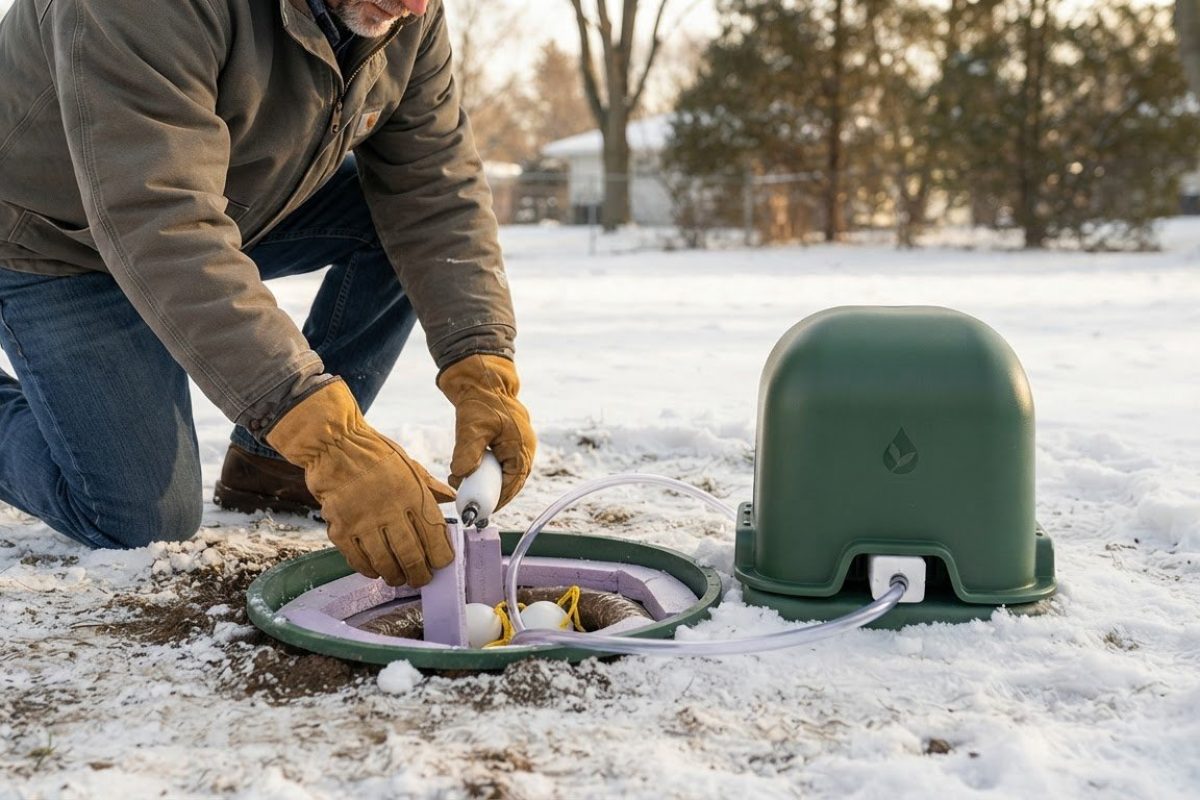
A septic tank can seem fine at the surface while frozen pipes or a high tank level threaten winter operation. Septic system care in winter starts with protecting exposed pipes and lids, keeping vehicles off the drainfield, and checking tank levels before freezing weather. If pumping is needed, the U.S. Environmental Protection Agency recommends pumping septic systems about every 3-5 years before winter.
Cold-weather concerns are understandable: freezing can interrupt wastewater flow and cause backups, while ice in drainfield pipes can interfere with dispersal. This guide explains how insulation, steady water use, and careful traffic control help protect system components, what warning signs to watch for, and how to assess tank levels before winter. You’ll also learn when a nearly full tank needs attention and why winter pumping can leave the drainfield more vulnerable.
Key Takeaways
- Protect shallow tanks and exposed pipes with suitable insulation, and keep lids and risers securely fitted to limit cold-air entry.
- Recognize how frozen ground can disrupt wastewater flow and watch for signs such as slow drains, gurgling, and unpleasant odors.
- Prevent drainfield pipe ice by fixing leaks, avoiding traffic over the system, and keeping water use steady without overloading the system.
- Review tank levels and maintenance history before winter so you can identify when a fall inspection or pumping may be needed.
1. Insulating the tank, pipes, and drain field
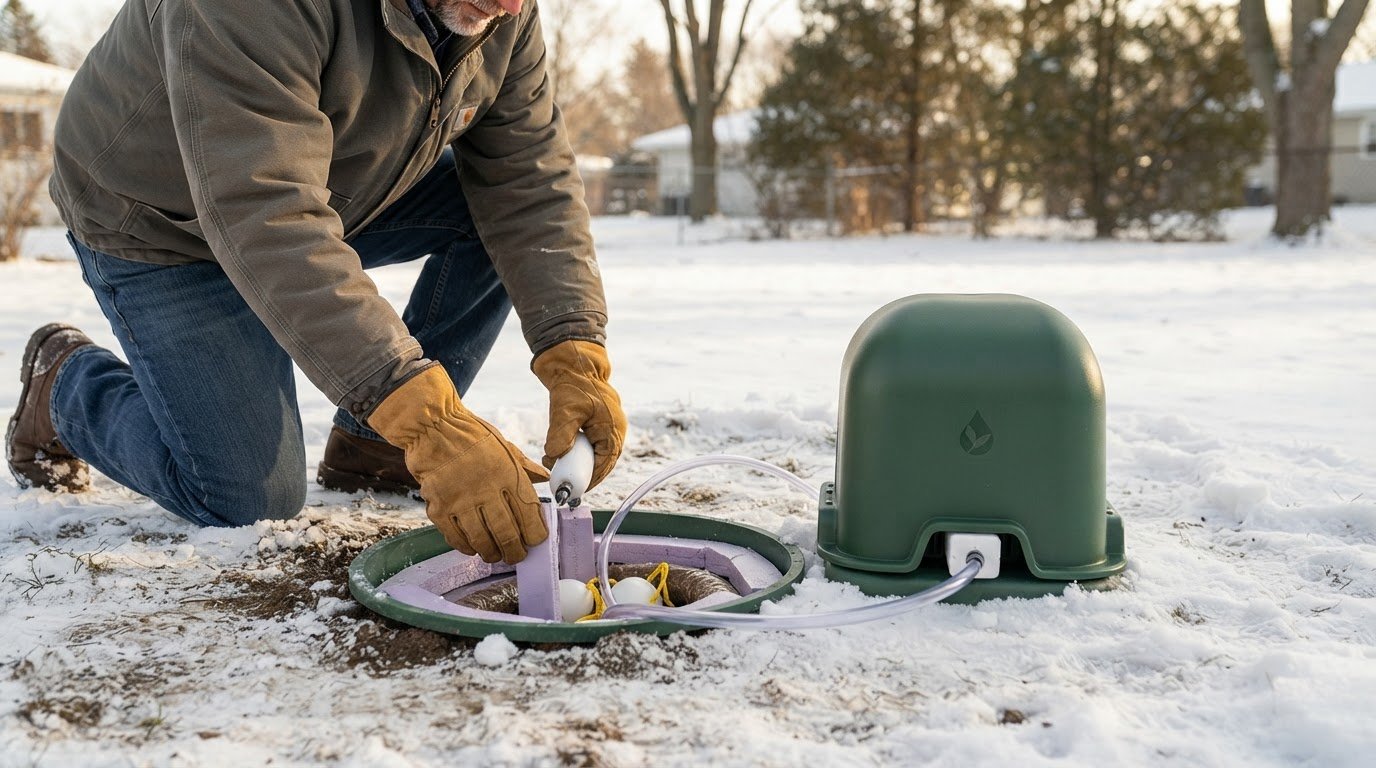
Start septic system care in winter before freezing temperatures arrive. Leave grass longer over the septic tank and drainfield to provide extra insulation. Check that lids and risers fit securely, and seal gaps that could let cold air reach the tank. A loose lid can leave a shallow tank more exposed during cold spells.
For a shallow tank or one in an area prone to freezing, foam insulation or a specialized septic tank cover can help retain warmth. Mulch, straw, or leaves over the tank and pipes can add protection, too. Keep these materials on the surface. Don’t dig above buried components or disturb the drainfield while preparing for winter.
Snow can insulate the ground and limit how deeply it freezes. Each inch of snow cover can provide up to an R1 insulation rating over a septic system. Avoid clearing snow from the tank and drainfield unless access is necessary. Heat from surrounding soil and septic effluent can help keep the soil treatment area above 35 degrees F.
State and local health department recommendations vary with local conditions and system design. Follow guidance suited to your area and system rather than assuming one insulation method works everywhere. A shallow tank, for example, may need different protection from a deeper, sheltered tank.
Keep vehicles and heavy machinery off the septic tank and drainfield in winter. Snow can conceal lids, pipes, and the drainfield, while vehicle weight can compact soil and interfere with wastewater dispersal. Mark the system’s location before snowfall so visitors know where not to park or drive.
Before temperatures drop, inspect visible lids, risers, and exposed pipes; seal gaps and insulate exposed sections. These steps support septic system care in winter, but insulation won’t fix a leak or a system that is already showing problems. Treat damaged components, pooling water, or slow drains as separate warning signs.
2. What Happens When a System Freezes?
Cold weather affects wastewater movement and the microbes that treat it. As soil temperatures fall, septic microbes may become dormant around 35-39 degrees F, slowing or stopping sewage processing. In colder climates, buried septic effluent may stay 10-20 F degrees warmer than surrounding soil. That warmth helps, but exposed pipes and shallow components remain vulnerable to freezing.
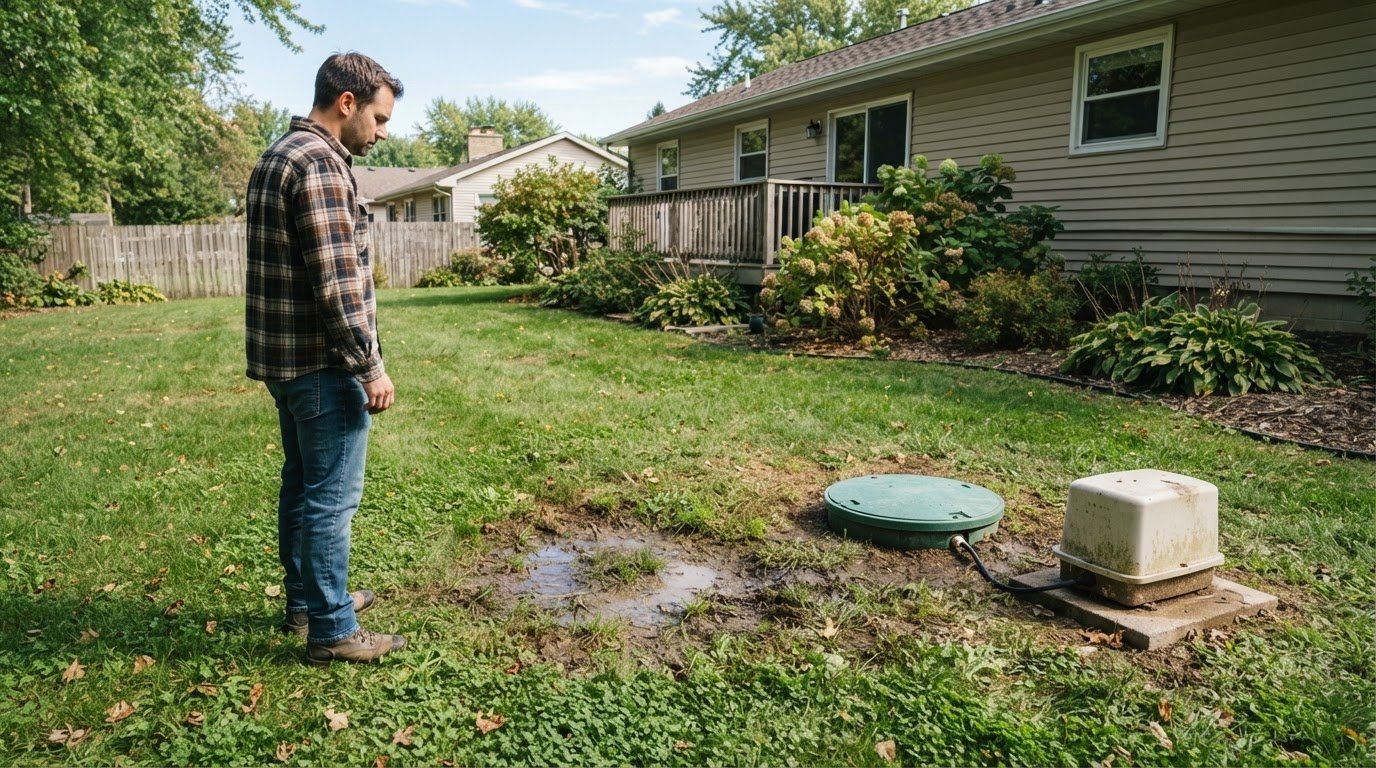
When the ground freezes, wastewater may not flow properly through the tank, pipes, and drainfield. Ice can block a line, while frozen soil can interfere with the drainfield’s ability to absorb effluent. Watch for slow drains, gurgling pipes, unpleasant odors, or pooling water near the drainfield. These signs need prompt attention. Avoid repeated flushing, which could add more wastewater.
Take cold-weather work seriously. At around 0° F, exposed skin can freeze in about 30 minutes, according to the National Weather Service. Keep outdoor checks brief in severe weather, wear suitable protective clothing, and avoid handling frozen pipes with bare hands. Don’t open or enter a tank to investigate a suspected blockage.
Continue ordinary household water use during extreme cold, but don’t increase it to “keep the system warm.” Regular use, such as showers, laundry, or dishwasher cycles, can help keep wastewater moving. Excessive use can overload a system, especially when the ground is saturated. Repair dripping faucets and running toilets, since trickling water can freeze in pipes and build up ice.
If pipes or the system appear frozen, stop adding unnecessary water and don’t pour antifreeze, salt, or additives into the system. If a pump is involved and you suspect freezing, shut it off and contact a septic professional. Don’t try to force-thaw buried pipes or walk over a frozen drainfield to investigate. A blockage may be underground, and surface ice can conceal pooling wastewater. Record symptoms and where they occur; this can help pinpoint whether the problem is in the plumbing, a line, or the drainfield.

3. Ice formation in drain-field dispersal pipes
A reliable part of septic system care in winter is preventing wastewater from trickling through cold pipes and freezing in place. A line with a 90-degree turn or a level stretch may collect ice if its design doesn’t account for extreme conditions. As ice narrows the passage, effluent may back up instead of dispersing through the drainfield. Slow drains or pooling ground can signal a developing restriction.
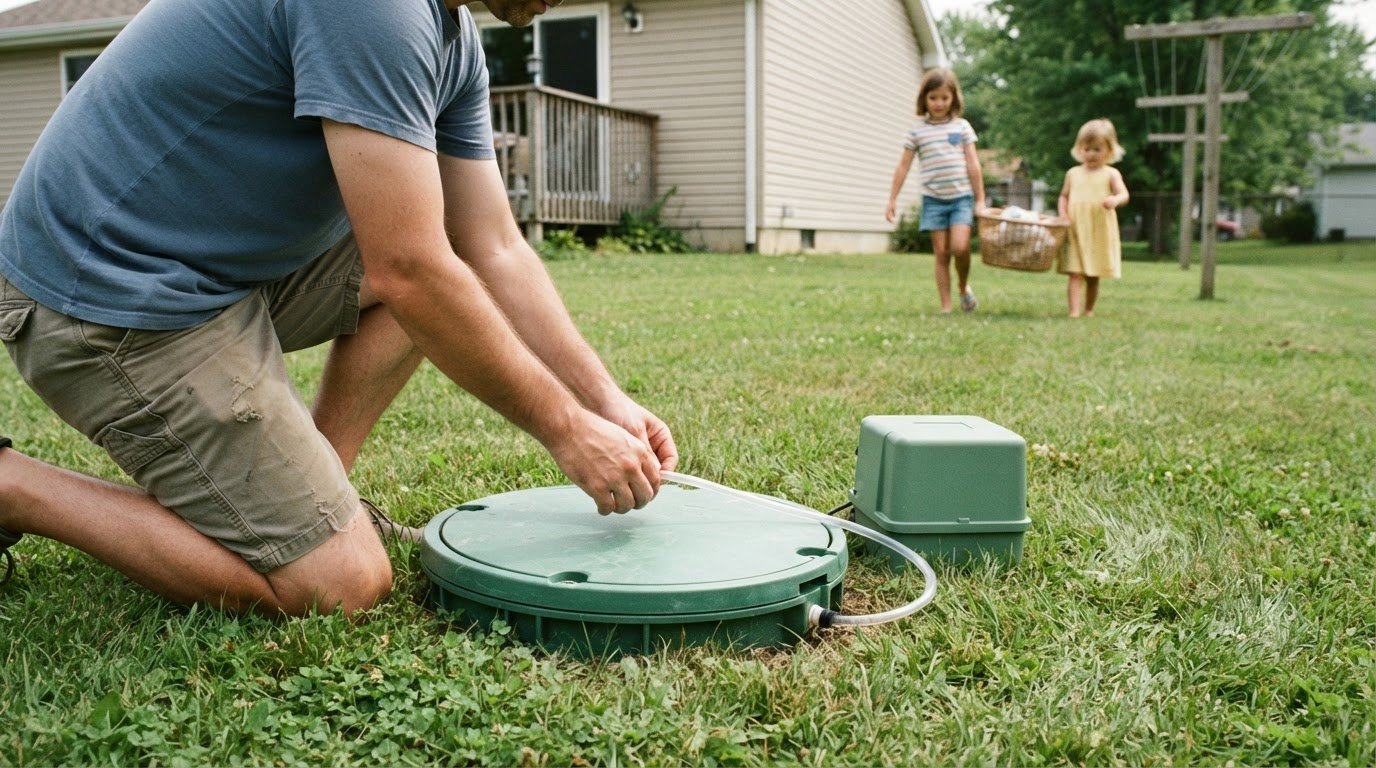
Before the cold season, inspect plumbing fixtures for leaks. A dripping faucet or running toilet can send a small flow through pipes long enough to freeze and form a blockage. Repair leaks before temperatures drop, and look for damaged insulation or gaps on exposed pipe sections. Check that tank covers and risers fit securely to limit cold air and moisture entry.
Keep household water use steady, not excessive. Laundry, showers, and dishwasher use can keep wastewater moving through the system, while sudden heavy use may strain a saturated drainfield. Don’t increase water use just to warm pipes. Space out water-heavy tasks when the ground is wet.
Protect the ground above buried pipes, too. Keep vehicles and foot traffic off the septic system because compacted soil can impair drainage and increase freezing risk. Check that grading directs surface water away from the drainfield to prevent runoff from pooling and freezing above dispersal pipes. Clear leaves and branches that obstruct drainage, but leave buried components undisturbed.
These practical checks help reduce ice risk by maintaining steady water flow and protecting exposed areas. Avoid winter pumping unless system conditions call for it; the drainfield may be more exposed to freezing while the system refills over days or weeks. If you suspect ice, note which drains are slow and where symptoms occur. Don’t add salt, antifreeze, or chemical additives to the system.
4. Checking septic tank levels
A fall level check helps reveal whether solids or liquid levels could threaten winter operation. Septic systems should be pumped about every 3-5 years before winter, if pumping is needed, according to the U.S. Environmental Protection Agency. That interval is a guideline, not an automatic pumping schedule: household size, water use, tank capacity, and accumulated solids affect timing.
A proper inspection looks beyond whether the septic tank appears “full.” A trained inspector measures the scum and sludge layers, checks liquid depth, and examines the inlet and outlet areas. The aim is to determine whether solids are approaching the outlet or could move into the drainfield. The tank’s normal liquid level alone doesn’t show how much settled material has accumulated.
Don’t open a tank or enter it to check levels yourself. Accessing a tank presents serious hazards, and a glance from the surface cannot accurately measure sludge. Keep records of prior inspections and pumping, and arrange a pre-winter inspection if the service history is unclear or symptoms have appeared. Slow drains, gurgling, odors, and pooling near the drainfield can signal trouble, but they don’t reveal the tank’s exact contents.
If a tank is nearly full before winter, the key question is whether “full” means a normal liquid level or excessive solids. Pumping may be needed when accumulated solids threaten the outlet or the tank’s function. Avoid routine winter pumping without a reason, since an emptied tank and drainfield may be more vulnerable to freezing while the system refills.
Use the inspection findings to make a clear decision: maintain the current schedule if solids remain well below the outlet, or address buildup before cold weather if levels threaten system function. Keep the inspection date and measured findings with your septic records. If you need a system component to support ongoing maintenance, explore septic tank risers for access to the tank opening.
Aero-Stream: Eco-Nest™ NSF/ANSI 40 Systems
Aero-Stream offers Eco-Nest™ NSF/ANSI 40 Systems designed to restore and maintain septic systems. Their aerobic treatment approach supports wastewater treatment by providing conditions for aerobic bacteria to break down waste. Consider this option when winter checks point to ongoing system performance concerns, rather than a single frozen pipe or an insulation problem.
An Eco-Nest system is not a substitute for protecting exposed pipes, keeping tank covers secure, or checking levels before winter. Those steps address cold-weather risks; the system is a treatment option for broader septic performance needs. Contact Aero-Stream to discuss whether an Eco-Nest™ NSF/ANSI 40 System may suit your septic system.
Plan Your Next Step Before Cold Weather Returns
Use the coming season to turn winter observations into a practical maintenance plan. If recurring performance issues remain after frozen components thaw, consider whether the treatment process itself needs attention rather than treating every symptom as an insulation problem. The right next step depends on inspection findings and how your system is functioning.
Aero-Stream offers Eco-Nest™ NSF/ANSI 40 Systems, Residential Remediator® Kits, and Bio-Brush® for septic system restoration and maintenance needs. These options address broader system performance concerns, not an immediate frozen pipe or a tank-level inspection. Matching the solution to the problem helps you make a more informed decision about septic system care in winter and beyond.
Share your system concern with Aero-Stream and explore which offering may fit your needs. Contact Aero-Stream about your septic system. A clear next step can help you move into the next season with greater confidence.
Frequently Asked Questions
What Happens When a System Freezes?
A freeze can interrupt wastewater treatment and flow, but the location of the blockage determines what happens next. Don’t open the tank to investigate or try to force a buried line clear. Record when the problem started, which fixtures are affected, and whether the issue changes as temperatures shift. These observations can help narrow down the problem without disturbing buried components.
How can you prevent septic pipes from freezing in winter?
Repair household leaks before cold weather, use septic-safe toilet paper, and limit harsh chemicals. These habits support normal treatment without relying on products intended as quick fixes. Keep water use sensible: spread laundry and other water-heavy tasks across the week instead of concentrating them in one period. Don’t add antifreeze, salt, or additives to the system.
What insulation or covers work best for a septic tank and drain field?
There isn’t one cover suited to every layout. Match protection to the tank’s exposure: foam insulation or a specialized cover can help retain heat around a shallow tank or one prone to freezing. Surface materials such as mulch, straw, or leaves may add cover around pipes. Keep tank access identifiable, and don’t cover lids in a way that makes safe access difficult.
What are signs of a frozen or failing septic system in winter?
Pay attention to changes from your household’s usual plumbing behavior, especially if several fixtures begin acting differently during a cold spell. Keep a brief record of when symptoms occur, which rooms are affected, and whether the problem worsens after heavy water use. This timeline can help distinguish a temporary change from a developing system problem and guide a more focused assessment.
How much does it cost to thaw or repair a frozen septic system?
The cost depends on where the problem is and how extensive it is. Thawing an accessible section differs from repairing a cracked pipe or addressing damage that reaches the drainfield. Parts, access to the affected component, and any backup damage also influence the work required. First identify the symptoms and affected area; cold weather alone isn’t enough to determine a price.
How does snow cover help protect a septic system from freezing?
Snow cover can slow heat loss from the ground, so preserving existing cover may help protect buried components. Don’t pile plowed snow onto the system: concentrated, compacted snow and its added weight differ from an even natural blanket. Before winter, mark the system’s location so snow clearing doesn’t send vehicles or machinery across tank access points or the drainfield.